
One Gift, Twelve Decisions: The 2026 Year End Corporate Gifting Checklist
A practical planning guide for HR and Admin teams, covering the purpose, recipient, budget, customisation, approval and delivery decisions behind a successful year end gift.

The Gift Is the Final Decision, Not the First
From the outside, year end gifting looks simple. Choose a product, add the company logo, approve the artwork and arrange delivery before the annual dinner or holiday break.
Inside an HR or Admin team, the project is rarely that straightforward. One gift may involve several recipient groups, a limited budget, changing quantities, custom artwork, individual names, sample approval, international addresses and a fixed delivery deadline. When those decisions remain open for too long, the team eventually stops choosing the most suitable gift and starts choosing whatever can still arrive on time.
The product is therefore not the first decision. It is the result of several earlier decisions working together.
A gift should not be expected to carry the entire weight of employee recognition. The CIPD evidence review on incentives and recognition describes recognition more broadly as personal acknowledgement of effort or achievement, including thanks, feedback, awards and written messages. A year end gift works best as the physical expression of that recognition, not a substitute for it.
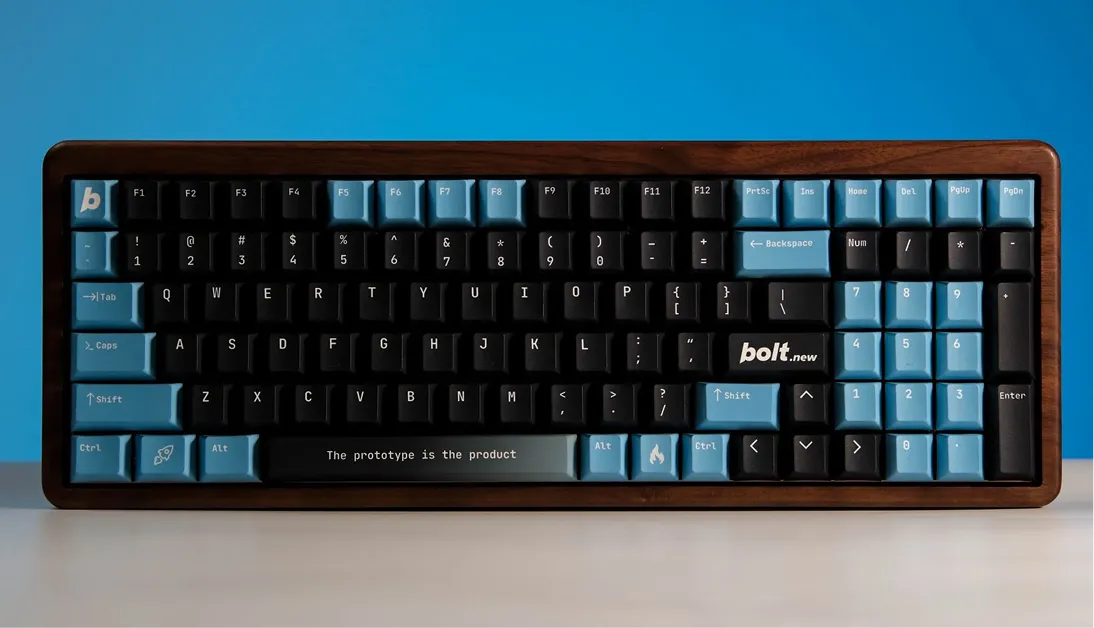
Across our projects for Double B Hostel, Cursor and Meta, the products and recipients were different. However, the same planning logic appeared each time. The message had to be defined, the product needed a reason to exist, the level of customisation affected the schedule, and the complete recipient experience had to be approved before production.
Those lessons can be organised into twelve decisions across four practical phases.
Phase One: Build the Brief Before You Browse
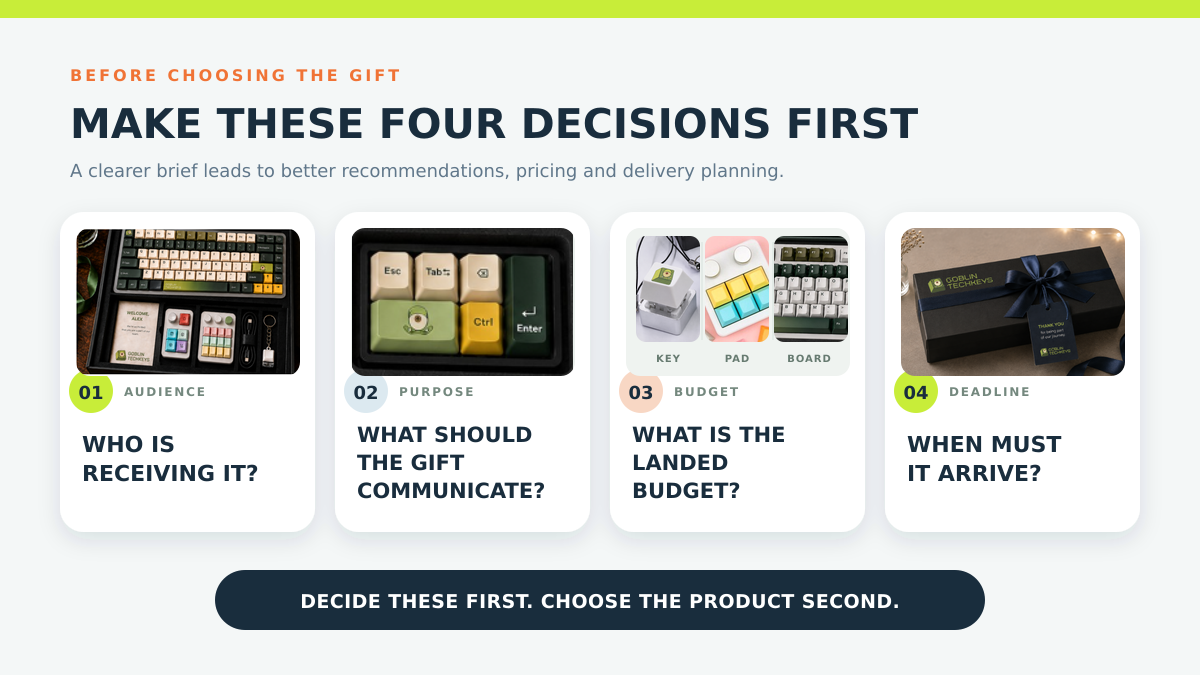
The first phase is about removing ambiguity. A supplier can recommend products only after understanding what the project is expected to achieve and what limits it must work within.
Decision 1: Define What the Gift Should Communicate
Begin with the reason for giving. An employee appreciation gift may recognise a difficult year or a shared achievement. A client gift may thank someone for a long term partnership. A partner gift may mark the completion of a particular project.
Complete this sentence before opening a catalogue:
When the recipient opens this gift, we want them to understand or feel __________.
The answer should be more specific than “appreciated”. What are they being appreciated for? Why is the company giving this now? What moment or relationship should the product represent?
Gallup’s workplace research suggests that the most effective recognition is honest, authentic and individualised to the person receiving it. It can be as simple as a personal note when the message is specific and comes from someone meaningful to the recipient. That makes the words surrounding a year end gift just as important as the item inside the box.
Our Double B Hostel project began with a real experience rather than a product request. After one of our team members had a particularly positive stay, he wanted to create a thank you gift connected to the hostel and its everyday environment. The reason came first. The wooden keyboard was chosen later.
Decision 2: Identify the Recipient Groups
One gift does not always need to serve everyone.
Employees, senior leaders, clients, partners and event guests may represent different relationships. Even within an employee group, a remote developer, a travelling sales representative and someone working from a permanent office may use products differently.
Separate recipients into practical groups and create an estimated quantity for each one. This helps the team decide whether everyone should receive the same gift, whether several versions are required or whether one group needs a more premium treatment.
The aim is not to create dozens of individual products. It is to avoid forcing one generic item to communicate several unrelated messages.
Decision 3: Set the Landed Budget
A product with a unit price of $20 does not necessarily cost $20 when it reaches the recipient.
The complete budget may include artwork setup, individual personalisation, samples, packaging, printed cards, shipping, duties, multiple delivery addresses, replacement units and rush production. If the team approves only the product budget, these additional costs tend to appear late, when changing direction becomes more difficult.
Set either a total project budget or a delivered budget per recipient. Then tell the supplier which costs must fit inside it.
A realistic budget does not limit creativity. It helps the supplier recommend a product and customisation level that can be produced without removing important details later.
Decision 4: Confirm the Delivery Deadline
The event date and the delivery deadline are not always the same.
Products intended for an annual dinner may need to arrive several days earlier for checking and venue preparation. Gifts sent individually may need to leave the warehouse weeks before the holiday period. International orders require additional time for customs and unexpected delivery delays.
Instead of asking only how long production takes, ask:
What is the latest approval date if everything must be in our hands by this date?
That question includes the part of the timeline most teams underestimate: the time spent finalising quantities, reviewing artwork and approving samples.
With the purpose, recipients, budget and deadline established, the project can move from planning into design.
Phase Two: Design the Gift Around Its Future Use
A year end gift receives the most attention when the box first opens. Its real value is tested after that moment, when the recipient decides whether the product belongs on their desk, in their bag or in a drawer.
Decision 5: Choose a Product With Somewhere to Go
Imagine the recipient one week after receiving the gift. Where is the product?
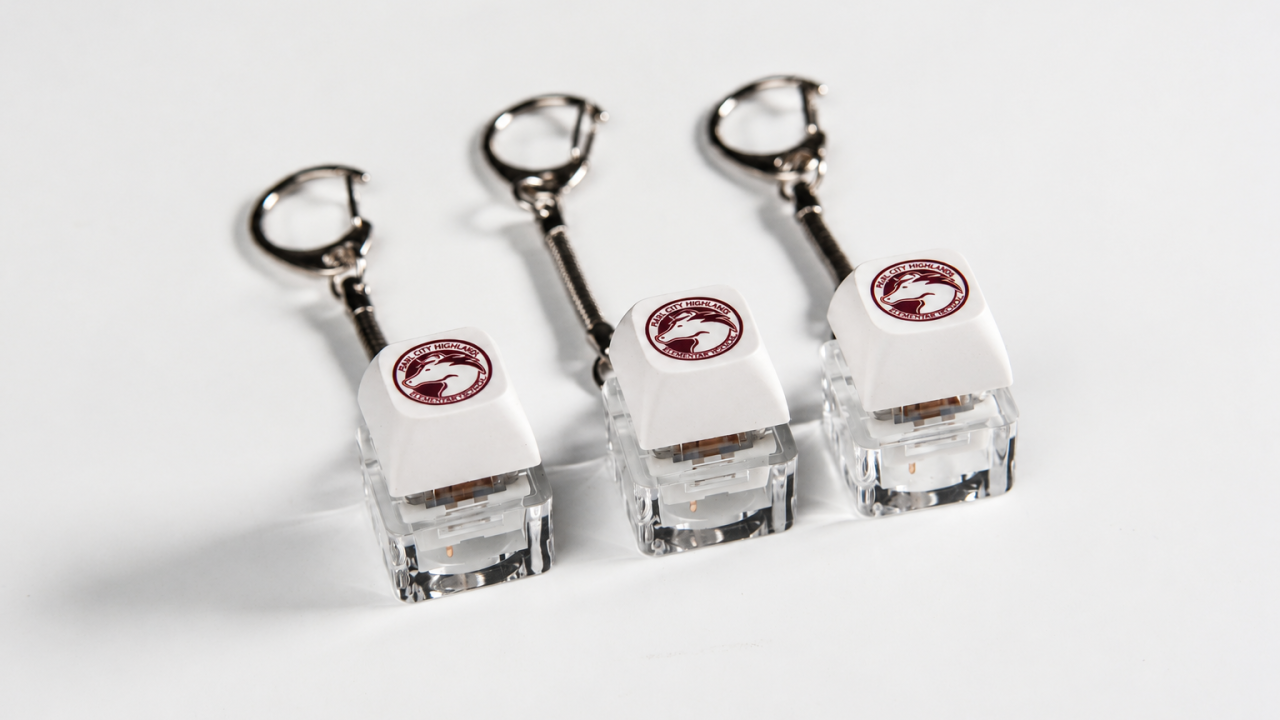
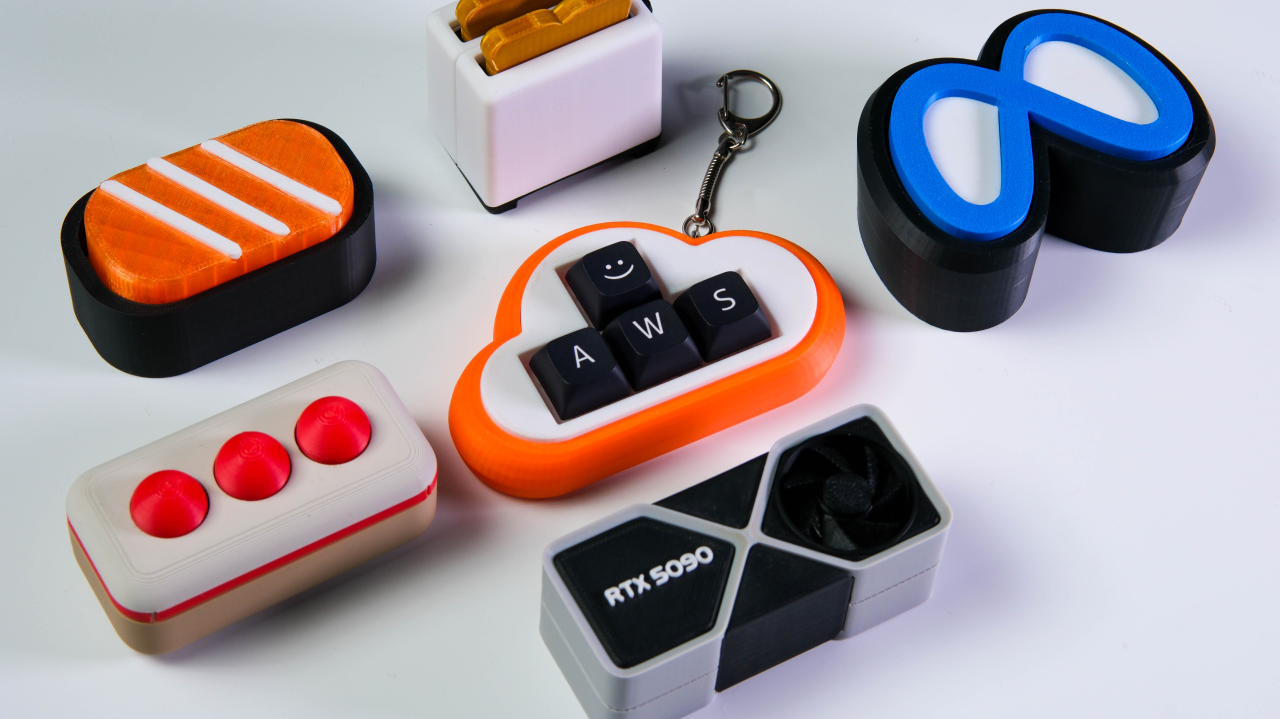
A keyboard may become part of a permanent desk setup. A macropad may support a repeated workflow. A keycap fidget may remain beside a monitor or travel on a bag. If there is no convincing answer, the product may have been selected for its presentation rather than its future use.
PPAI’s 2025 consumer study found that 68% of respondents kept promotional products because they expected to use them, while 57% specifically cited usefulness in daily life. Quality also mattered, with 62% identifying poor material or construction as a reason an item felt cheap or forgettable.
Useful does not have to mean ordinary. A familiar object can still become distinctive through its material, colours, interaction or connection to a specific story.
The Double B Hostel keyboard worked because it could remain in the hostel’s everyday workspace. Its wooden construction also suited the warmth and hospitality behind the thank you message. The product, material and reason for giving all pointed in the same direction.

Decision 6: Choose the Necessary Level of Customisation
Customisation is not one fixed service. It can happen at several levels:
- Logo customisation: printing or engraving a logo on an existing product
- Brand customisation: adapting colours, graphics, keycaps and packaging
- Product customisation: changing the enclosure, components, layout or function
- Recipient personalisation: adding individual names, roles or versions
The right level depends on what the gift needs to communicate. More customisation is not automatically better. Each additional layer may require artwork, engineering, sampling and approval time.
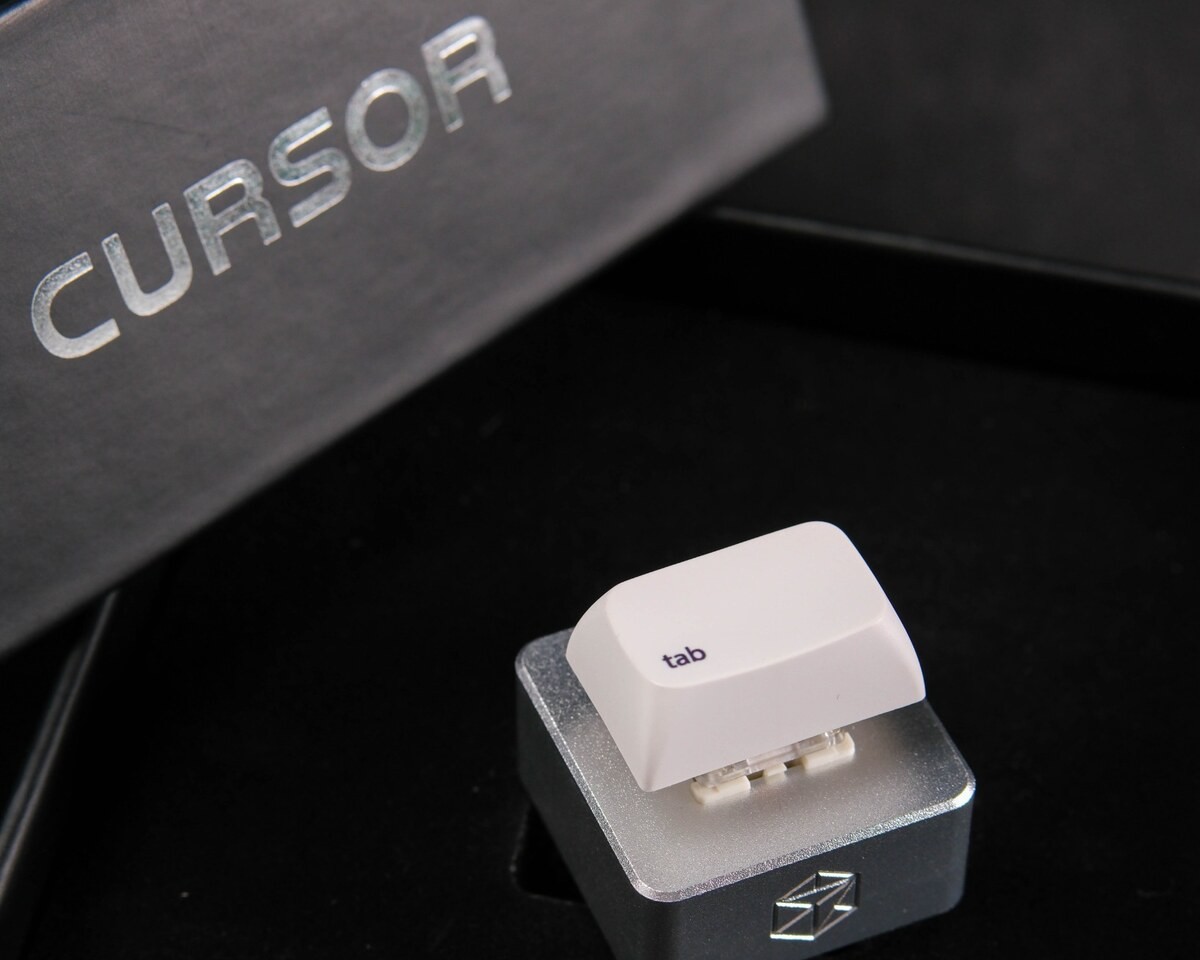
The Cursor single key metal macropad illustrates the difference between branding an existing object and developing a product around a specific use. The project involved custom PCB design, metal enclosure engineering, key refinement, engraving, packaging and global shipping. The result appeared simple because the complexity had been resolved before production.
That level of development can create something highly specific, but it needs a different timeline from printing a logo on a ready made product.
Decision 7: Connect the Packaging and Message to the Occasion
Packaging should protect the product and make the reason for giving easy to understand. It should not be expected to rescue an unsuitable product.
A short card can explain the year’s achievement, thank the recipient for a particular contribution or connect the product design to the company’s story. Individual names can add meaning without placing personal information on every item.
PPAI’s study found that 48% of respondents considered personalisation more memorable, and another 48% said a short personal message added meaning. At the same time, 26% identified careless packaging or presentation as a reason a product felt forgettable.
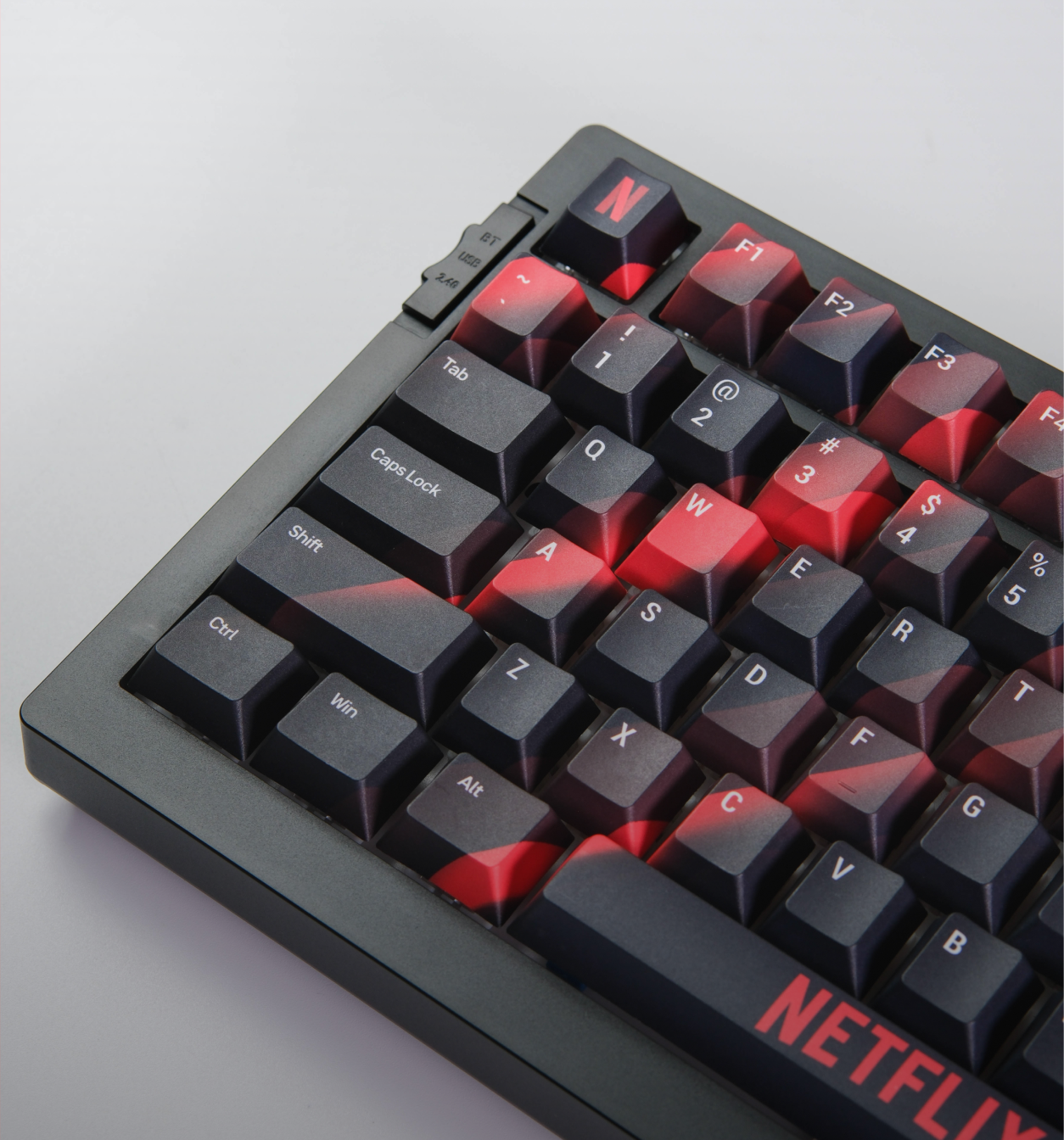
For a Meta keyboard project, the packaging was reviewed as part of the product experience rather than treated as a shipping container added at the end. That same principle applies to year end gifting. The item, insert, protection and presentation should feel like parts of the same decision.
The message does not have to be long. It has to explain why this product is being given to this person at this moment.
Phase Three: Make Approval a Real Milestone
A project is not approved because several people have looked at it. It is approved when the correct person has confirmed the complete specification and the supplier knows that production can begin.
Decision 8: Lock the Quantity and Send a Complete Brief
Estimated quantities are useful during initial discussions, but final pricing and production planning require a confirmed number.
The brief should include:
- Purpose and recipient groups
- Final quantity and any replacement buffer
- Landed budget
- Delivery deadline
- Delivery destinations
- Product and material preferences
- Brand guidelines and artwork
- Personalisation requirements
- Packaging requirements
- Approval contact
These fields are connected. Changing the quantity may change the unit price. Changing the packaging may change shipping dimensions. Adding individual names may affect production files and fulfilment. A complete brief allows those effects to be considered together.
Decision 9: Assign One Final Approver
HR, Marketing, Procurement and Management may all need to review the project. However, the supplier should not receive separate and sometimes contradictory instructions from several people.
Assign one project owner to collect internal comments, confirm spelling, resolve conflicting feedback and provide the final approval. Everyone can contribute, but one person needs the authority to say that the design is ready.
This step is especially important for highly customised products. In the Cursor project, the key, enclosure, electronics, engraving and packaging were connected. A change to one part could affect the others, so approval needed to cover the entire product rather than one logo file.
Decision 10: Review the Sample as a Recipient Would
Do not approve a sample by checking only whether the logo is correct.
Open the package. Hold the product. Use it. Look at the scale, weight, colours, material and finish. Check the spelling, print quality, engraving, functionality and any QR code. Then place everything back inside the packaging and consider whether the experience still feels clear.
A screen mockup cannot fully communicate texture, weight or physical scale. If a sample cannot be produced ahead of the full run, request detailed photographs or video showing the actual material and printing method.
For the Meta packaging, the product protection and presentation were part of the review. This is the difference between approving an individual component and approving the experience the recipient will receive.

Approval is where planning becomes production. Once it has been given, late changes usually cost more time and create more risk.
Phase Four: Plan Delivery Before Production Ends
A completed product in a warehouse is not a completed gifting project. The final phase determines whether the right gift reaches the right recipient at the right time.
Decision 11: Confirm the Fulfilment Model
Decide early whether the order will be:
- Delivered to one office
- Split between several locations
- Distributed during an event
- Shipped directly to individual recipients
- Delivered internationally
For individual delivery, assign someone to collect and verify addresses. Use a consistent address format and set an internal deadline for corrections. Confirm who will receive tracking information and how failed deliveries, address changes and replacement units will be handled.
Address collection can become a significant part of the project when recipients are remote or international. It should not begin after production is finished.
Decision 12: Work Backwards and Protect a Delivery Buffer
A useful year end schedule works backwards from the delivery deadline:
August to September: define the purpose, recipients, estimated quantity, budget and deadline.
September to October: select the product, confirm the customisation scope, prepare artwork and approve samples.
October to November: complete production, packaging preparation, address collection and quality checks.
November to December: arrange delivery, monitor tracking and keep time available for replacements or delays.
This schedule is an example, not a universal production promise. Large quantities, engineered products, individual personalisation and international deliveries may require an earlier start.
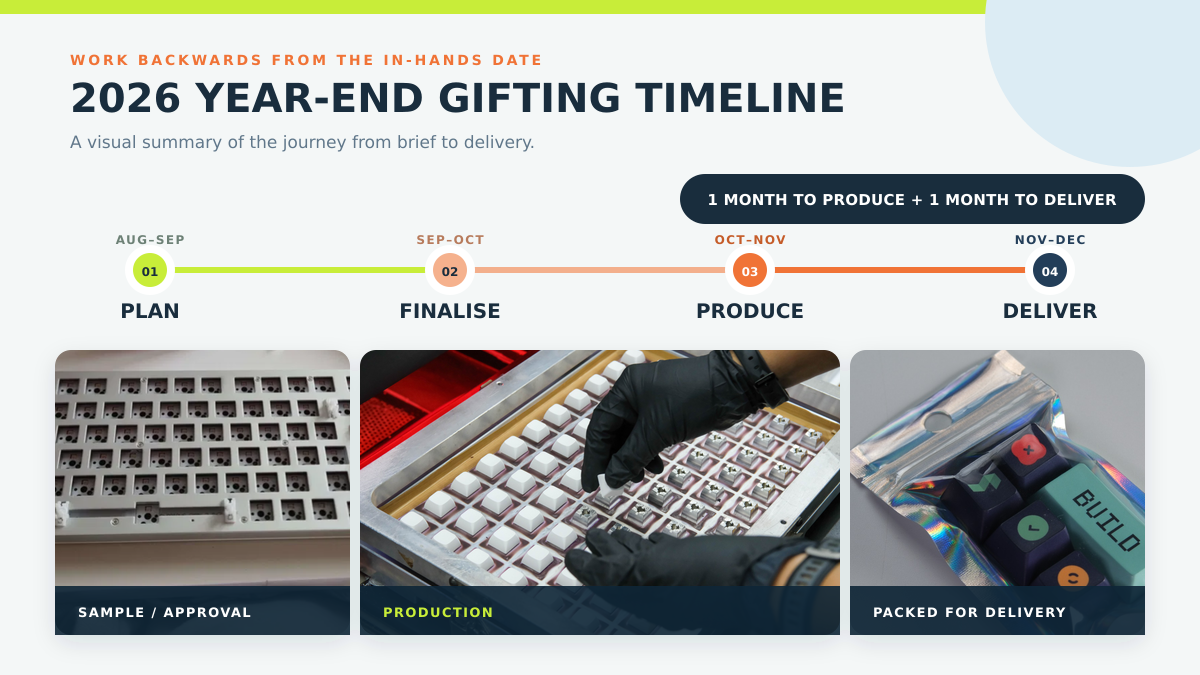
The purpose of a timeline is not simply to make the project faster. It is to keep important decisions from being rushed at the end.
The Brief Should Fit on One Screen
By this point, the project should be explainable without forwarding a long email chain. A supplier should be able to see:
- Who the recipients are
- What the gift should communicate
- The estimated and final quantities
- The complete delivered budget
- The delivery deadline
- The required customisation and packaging
- Who has final approval
- How the gifts will be distributed
These are not additional questions. They are the twelve decisions above compressed into one working brief.
The Double B Hostel keyboard, Cursor macropad and Meta packaging project were very different in scale and purpose. What connects them is that the physical product followed the message, use case and project requirements. The object did not have to create the meaning by itself.
That is the central lesson for year end gifting. The most expensive product is not automatically the most thoughtful, and the largest logo does not create the strongest recognition. A suitable gift is one that fits the recipient, carries a clear reason for being given and arrives with enough care that the message remains intact.
Start With the Brief, Not the Catalogue
GoblinTechKeys helps companies develop custom keycaps, Clicky Fidgets, macropads, mechanical keyboards and packaging for employee appreciation, client gifting and partner programmes.
When contacting us, share the recipient group, quantity, landed budget, customisation requirements and delivery deadline. We can then recommend an option that fits the project rather than simply filling the box.

Mission statement isn't a static asset you design once and forget. It is a live promise. In a fast-paced market where users have endless alternatives at their fingertips, authenticity isn't a design aesthetic—it’s the ultimate competitive advantage.
Mission statement isn't a static asset you design once and forget. It is a live promise. In a fast-paced market where users have endless alternatives at their fingertips, authenticity isn't a design aesthetic—it’s the ultimate competitive advantage.
Mission statement isn't a static asset you design once and forget. It is a live promise. In a fast-paced market where users have endless alternatives at their fingertips, authenticity isn't a design aesthetic—it’s the ultimate competitive advantage.
Heading 1
Heading 2
Heading 3
Heading 4
Heading 5
Heading 6
Lorem ipsum dolor sit amet, consectetur adipiscing elit, sed do eiusmod tempor incididunt ut labore et dolore magna aliqua. Ut enim ad minim veniam, quis nostrud exercitation ullamco laboris nisi ut aliquip ex ea commodo consequat. Duis aute irure dolor in reprehenderit in voluptate velit esse cillum dolore eu fugiat nulla pariatur.
Block quote
Ordered list
- Item 1
- Item 2
- Item 3
Unordered list
- Item A
- Item B
- Item C
Bold text
Emphasis
Superscript
Subscript