
Before You Order Corporate Gifts, Ask These 5 Questions
Five practical questions to help teams choose corporate gifts that feel useful, personal and worth keeping, from the first brief to the final unboxing.
The Catalogue Is Not the Best Place to Start
Corporate gifting often becomes a product search too early. A team opens a catalogue, compares colours and unit costs, then tries to create meaning afterwards through logo placement and a message card. That sequence may produce a tidy order, but it leaves the most important decision until last: what should the recipient understand, feel or be able to do after receiving the gift?
A useful gift brief begins with an intended outcome. In a 2026 Shopify profile of corporate gifting studio Telescope, founder Chloe Sapienza explains that a strong gift should have a purpose from the beginning, whether it is recognising a milestone, supporting employees or strengthening a client relationship. She also makes an important point for teams tempted to fill a large box: sometimes one thoughtful item is enough.
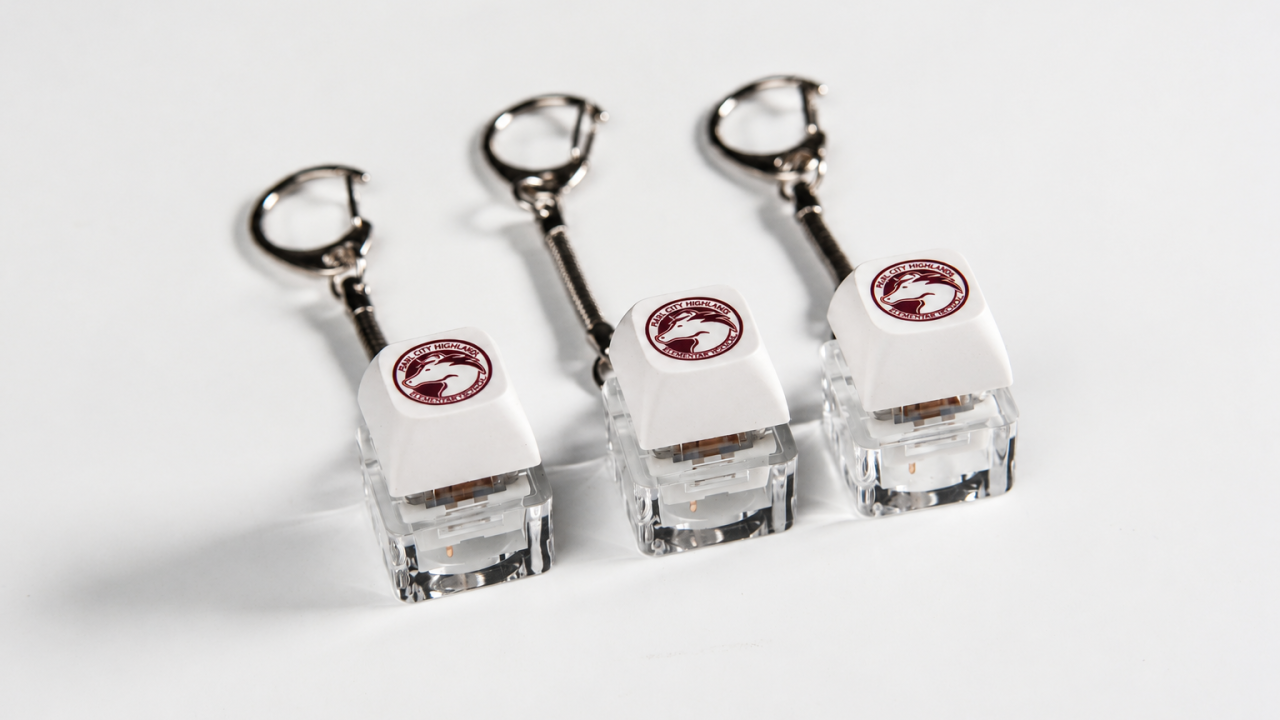
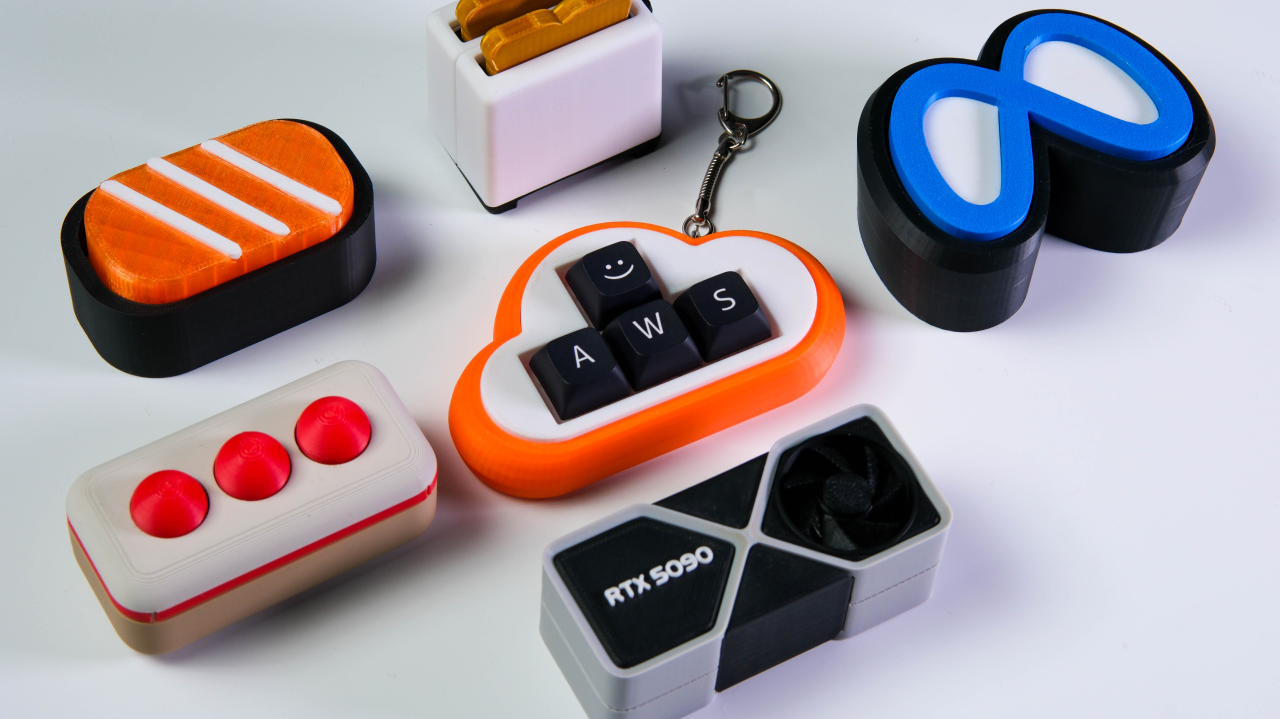
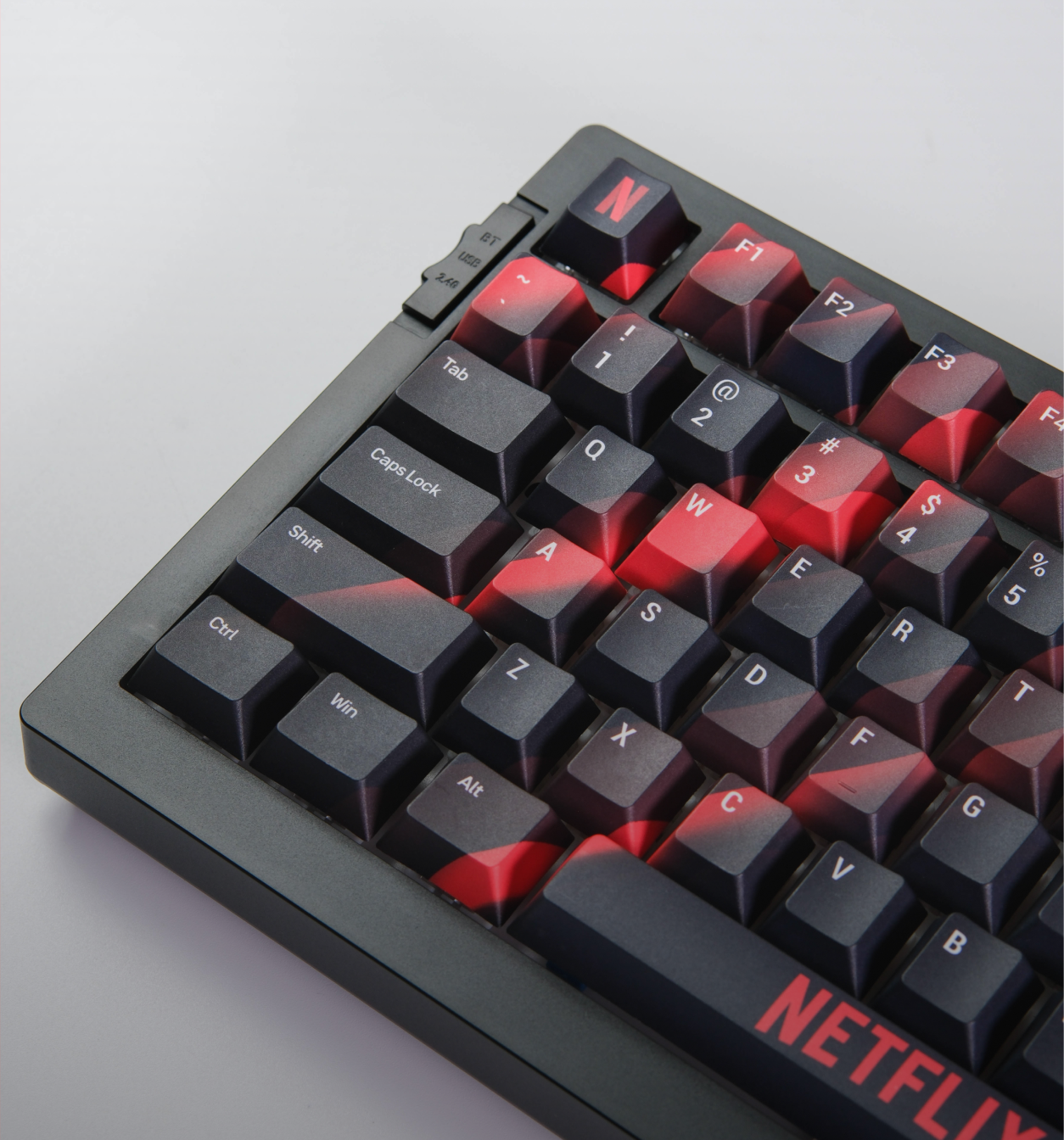
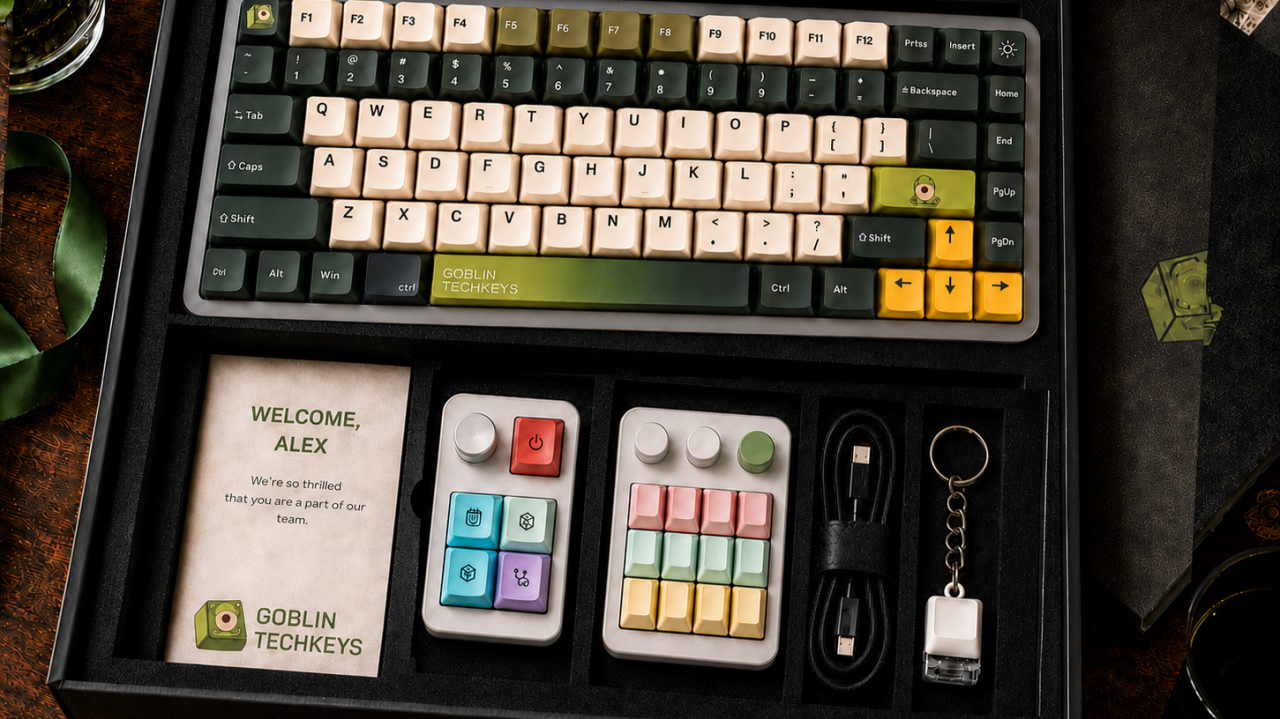
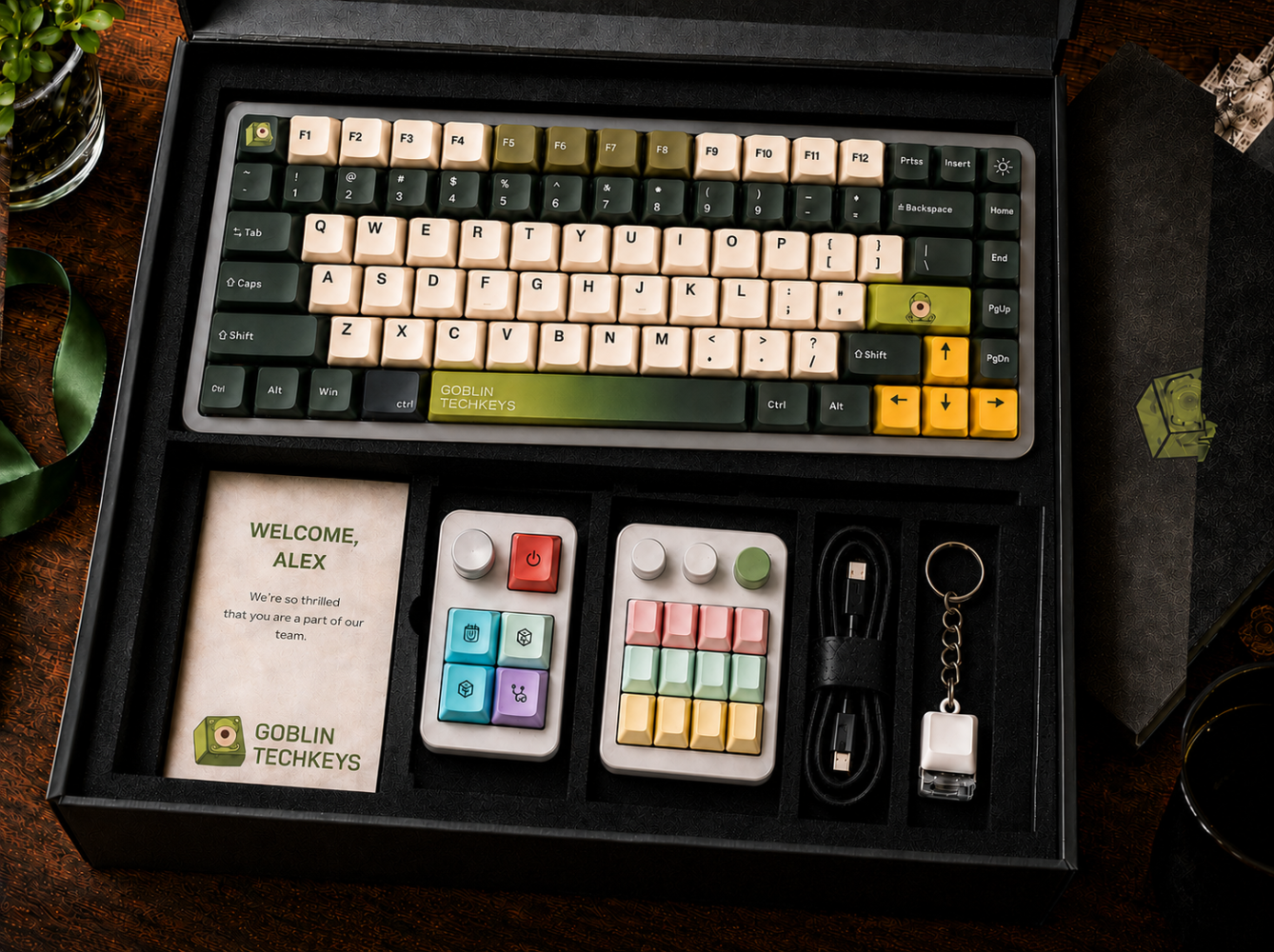
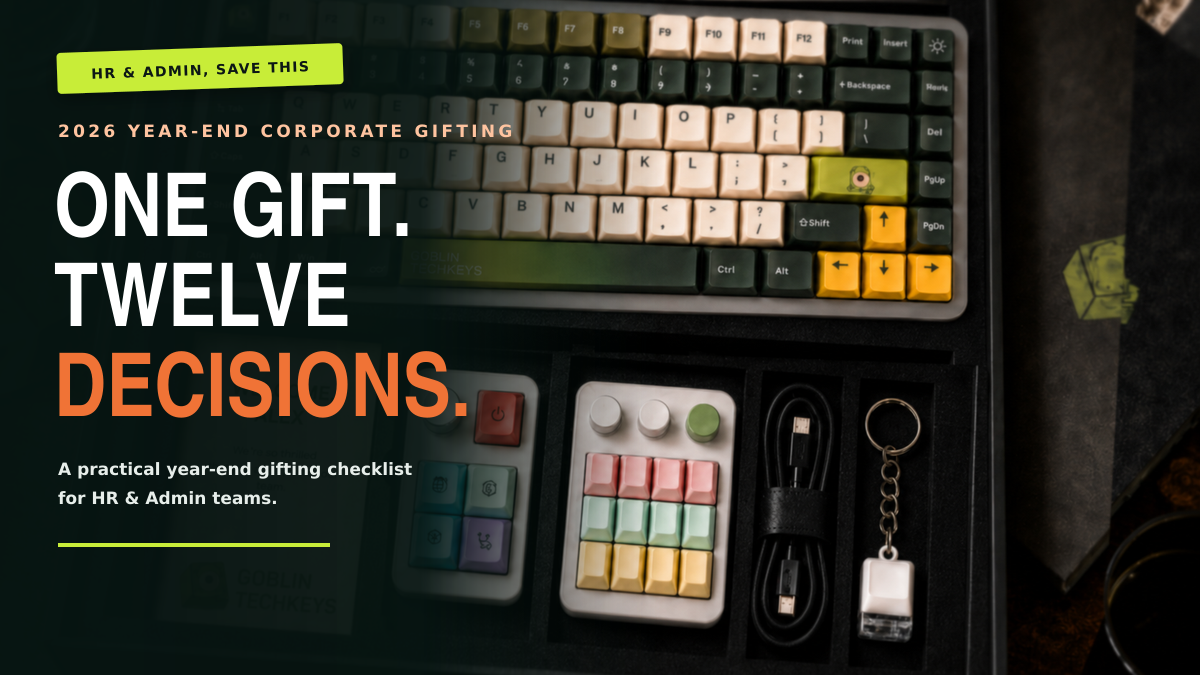
To make the five questions practical, this article follows one example throughout: a welcome kit created for an employee who works at a desk. The pictured kit combines a custom keyboard, programmable desk controls, a cable, a small keyring accessory and a named welcome card. It is not a universal formula for corporate gifting. It is an example of how separate decisions can be brought together into one coherent experience.
1. What Should This Gift Accomplish?
Begin by completing one sentence:
After receiving this gift, we want the recipient to feel, remember or be able to do __________.
An onboarding gift might help a new employee feel expected and equipped for their first day. An employee recognition gift might mark a contribution that deserves to be remembered. A client gift might acknowledge a completed project or create a natural reason to reconnect. These are different outcomes, even if some of the same products could appear in each box.
This first decision prevents the gift from trying to perform too many jobs at once. If a box is expected to welcome, reward, advertise, impress and explain the company all at the same time, the message will probably become unclear. A defined outcome gives the products, card, branding and packaging one shared direction.
For the welcome kit pictured here, the outcome is straightforward: help a new employee feel that their arrival was planned for, while giving them tools that can become part of their working day. That sentence immediately changes how the rest of the kit should be designed.
Once the outcome is clear, the next question becomes more specific. Who is the person expected to use it?
2. Who Will Receive It?
“Employees” is not a sufficiently detailed recipient profile. Neither is “clients”, “developers” or “event attendees”. People within the same group may work in different environments, use different devices and value completely different kinds of objects.
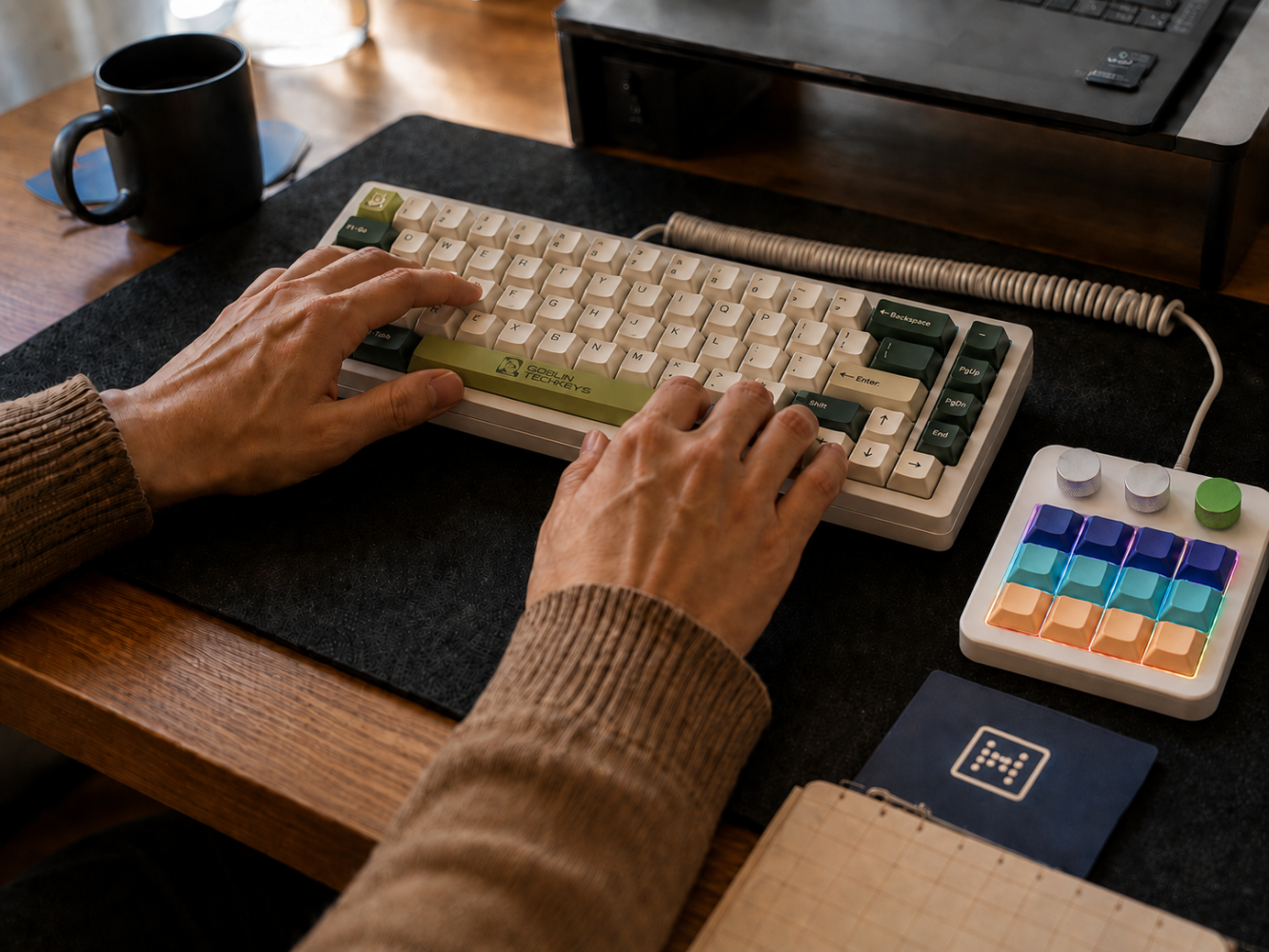
Before choosing a product, consider where the recipient works, what equipment they already use and whether they have any meaningful preferences. A desk accessory may suit someone with a permanent workstation but be inconvenient for a colleague who travels frequently. A mechanical keyboard could be an excellent choice for one team and completely wrong for another.
Research by Francesca Gino and Francis Flynn on explicitness in gift exchange found that recipients appreciated requested gifts more than givers expected. The workplace implication is not that every employee needs access to an unlimited catalogue. It is that asking a few relevant questions can be more thoughtful than guessing.
A company might offer two keyboard sizes, several switch options or a small choice of colourways. It could also ask whether the recipient already owns similar equipment. These limited choices preserve purchasing control while reducing the risk of sending something unsuitable.
For the example welcome kit, the custom keyboard works only because the imagined recipient works at a desk and is likely to use it regularly. If that assumption is wrong, the gift brief should change before the product order begins.
3. Where Will It Live After the Box Is Opened?
The unboxing lasts a few minutes. The more important test begins the following week.
Picture the recipient returning to work after the excitement of opening the package has passed. Where does each item go? Does the keyboard replace an existing tool? Does the cable stay in a laptop bag? Does the keyring accessory attach to something the recipient already carries? If an item has no believable destination, it may have been selected for the photograph rather than the person.
This matters because usefulness remains one of the clearest reasons people keep branded merchandise. In PPAI’s 2025 consumer study, 57% of respondents said they kept their most recent promotional product because it was useful in daily life. Another 42% said it looked good and had a high quality feel. The study covered consumers of promotional products generally, but the principle is directly relevant to corporate gift planning: use and quality continue to matter after the presentation is over.
In the pictured kit, the keyboard acts as the main product used every day. The programmable controls support specific desk workflows, while the cable and keyring accessory have smaller supporting roles. That hierarchy is important. A gift box does not become more thoughtful simply because it contains more items.
Before adding another product, ask whether it supports the intended outcome or merely fills an empty compartment. If the same message can be delivered through one excellent product and a personal note, removing the extra item may improve the gift.
4. What Should Feel Personal, and What Should Stay Branded?
Customisation and personalisation are related, but they are not identical. A product becomes customised when a company applies its colours, logo or graphic system. It feels personal when the recipient can see that the gift relates to their name, role, preference or occasion.
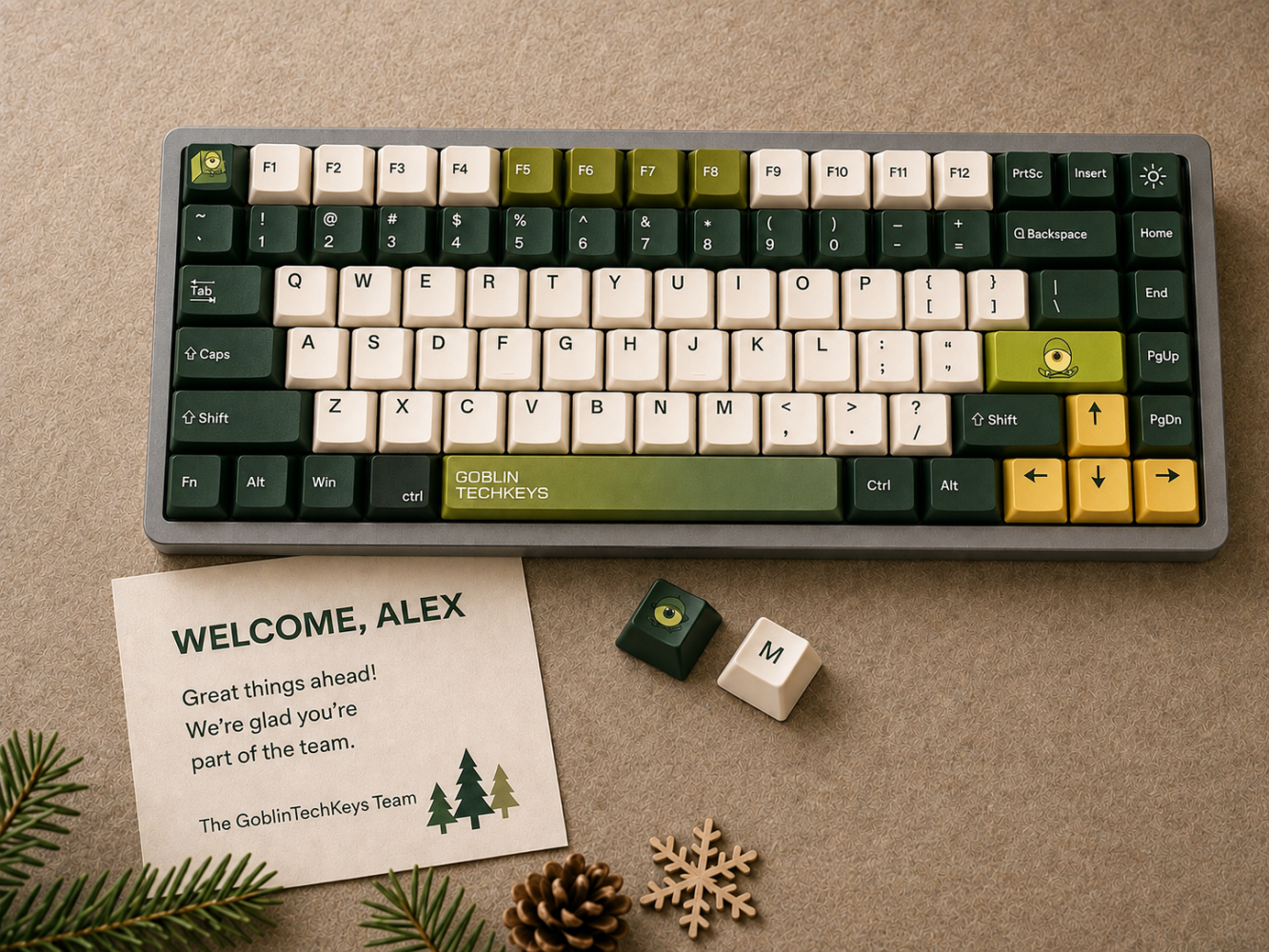
The distinction helps prevent overdesign. Not every object needs the recipient’s name, and not every surface needs the company logo. In the welcome kit, the person’s name belongs on the card, where it supports the welcome message. The brand identity then carries across the keyboard and accessories through colour, typography and selected graphic details.
PPAI’s 2025 study found that 48% of respondents considered a personalised promotional item more memorable, while the same percentage said that a short personal message or note would make it more meaningful. The study also found an interesting balance in branding: 44% preferred subtle branding over large, dominant logos, while 57% said a clear and visible brand name helped them remember who provided the item.
The practical lesson is that subtle branding does not mean invisible branding. A logo can remain recognisable without becoming the main reason the product exists. The object should still look desirable when viewed from the recipient’s side of the desk.
For this onboarding example, the named card communicates that the gift was prepared for a particular person. The coordinated product colours make the kit recognisably GoblinTechKeys. Each layer performs a different job, so neither the name nor the logo needs to cover everything.
5. Does the Unboxing Support the Product?
Once the outcome, recipient, daily use and personal details have been settled, packaging can bring those decisions together. Its role is not simply to make the gift look expensive. Good packaging should protect the contents, establish a clear visual order and help the recipient understand why the items belong together.
Presentation also creates expectations. Research summarised by the Society for Consumer Psychology found that wrapping quality can influence what recipients expect from the product inside. An elaborate exterior can therefore work against the gift if the contents do not meet the expectation it creates. Although that research examined personal gift exchange rather than corporate kits, the warning is useful: packaging should support the product rather than compensate for it.
In the example kit, the welcome card is visible when the box is opened, so the occasion is immediately clear. The keyboard holds the dominant position because it is the main gift. Smaller controls and accessories sit in defined compartments instead of appearing as unrelated extras. The arrangement explains the hierarchy before the recipient reads any instructions.
Practical details matter too. Products should remain secure during shipping, cables should be easy to identify and anything requiring setup should include clear guidance. A beautiful box that arrives damaged or leaves the recipient unsure how to use the main product has not completed its job.
Turn the Five Answers Into One Brief
These five questions are most useful when their answers are combined rather than treated as separate tips. For the welcome kit pictured here, the complete brief might read like this:
Create an onboarding gift for an employee who works at a desk that makes their arrival feel planned for and gives them a useful everyday tool. Use a custom keyboard as the main product, add only accessories with a clear supporting role, place the recipient’s name in the welcome message and carry the company identity through a restrained colour and graphic system. Package everything so the occasion and product hierarchy are immediately understandable.
That paragraph is specific enough to guide product selection, design and packaging, but flexible enough to accommodate different budgets and recipient preferences. It also gives the team a way to review ideas. If a proposed item does not support the brief, there should be a clear reason before it is added.
The strongest corporate gifts are designed backwards from the recipient’s experience. Start with the outcome, understand the person, picture where the product will live, decide what should feel personal and let the packaging make that logic visible.
The logo may belong to the company. The object, once given, has to belong in someone else’s life.
Create Corporate Gifts People Will Keep
GoblinTechKeys helps companies develop custom keyboards, macropads, desk accessories and packaged gift sets for onboarding, employee recognition and client appreciation.
Tell us who the gift is for, what the occasion means and where you hope the product will live afterwards. We can help turn those answers into one coherent corporate gifting experience.

Mission statement isn't a static asset you design once and forget. It is a live promise. In a fast-paced market where users have endless alternatives at their fingertips, authenticity isn't a design aesthetic—it’s the ultimate competitive advantage.
Mission statement isn't a static asset you design once and forget. It is a live promise. In a fast-paced market where users have endless alternatives at their fingertips, authenticity isn't a design aesthetic—it’s the ultimate competitive advantage.
Mission statement isn't a static asset you design once and forget. It is a live promise. In a fast-paced market where users have endless alternatives at their fingertips, authenticity isn't a design aesthetic—it’s the ultimate competitive advantage.
Heading 1
Heading 2
Heading 3
Heading 4
Heading 5
Heading 6
Lorem ipsum dolor sit amet, consectetur adipiscing elit, sed do eiusmod tempor incididunt ut labore et dolore magna aliqua. Ut enim ad minim veniam, quis nostrud exercitation ullamco laboris nisi ut aliquip ex ea commodo consequat. Duis aute irure dolor in reprehenderit in voluptate velit esse cillum dolore eu fugiat nulla pariatur.
Block quote
Ordered list
- Item 1
- Item 2
- Item 3
Unordered list
- Item A
- Item B
- Item C
Bold text
Emphasis
Superscript
Subscript
One Gift, Twelve Decisions: The 2026 Year End Corporate Gifting Checklist